

The White Door
Second Maze
I went into The White Door expecting another compact mystery from the creators associated with Rusty Lake and Cube Escape, but I quickly found that it asks for a different kind of attention. This is an adventure game built around observation, routine, and an uneasy atmosphere rather than constant action. Its strange setting becomes more effective when you stop looking for obvious answers and start noticing small details in the way each scene is arranged.
That makes it a particularly good choice for players who enjoy quiet puzzles, unsettling stories, and games that leave room for interpretation. It is not the sort of adventure I would recommend to someone looking for combat, fast movement, or a large world to explore freely. I would recommend it to a friend who likes solving unusual problems at their own pace, especially when the mood matters as much as the solution.
How the current version feels to play
The current release is version 1.2.6, and my overall impression is of a focused experience rather than a sprawling one. The game keeps its attention on a confined environment and uses repetition deliberately. Instead of filling every moment with new mechanics, it encourages you to examine familiar actions from a slightly different angle. That restraint is one of its strongest qualities, although it can also make the opening feel deliberately slow.
The basic rhythm is easy to understand. I look around, interact with objects, follow the character’s routine, and try to connect what I see with the next useful action. The challenge is rarely about reflexes. It is more often about recognizing a pattern, remembering a visual clue, or understanding why an ordinary event has been presented in such an unusual way.
That structure makes the game comfortable to play in short sessions. I can spend a few minutes investigating one sequence, put the phone down, and return later without needing to rebuild a complicated control setup. At the same time, the atmosphere rewards longer sessions when I am already absorbed in the mystery. The best approach is not to rush through every interaction. I get more from it when I treat each scene as evidence.
Related News






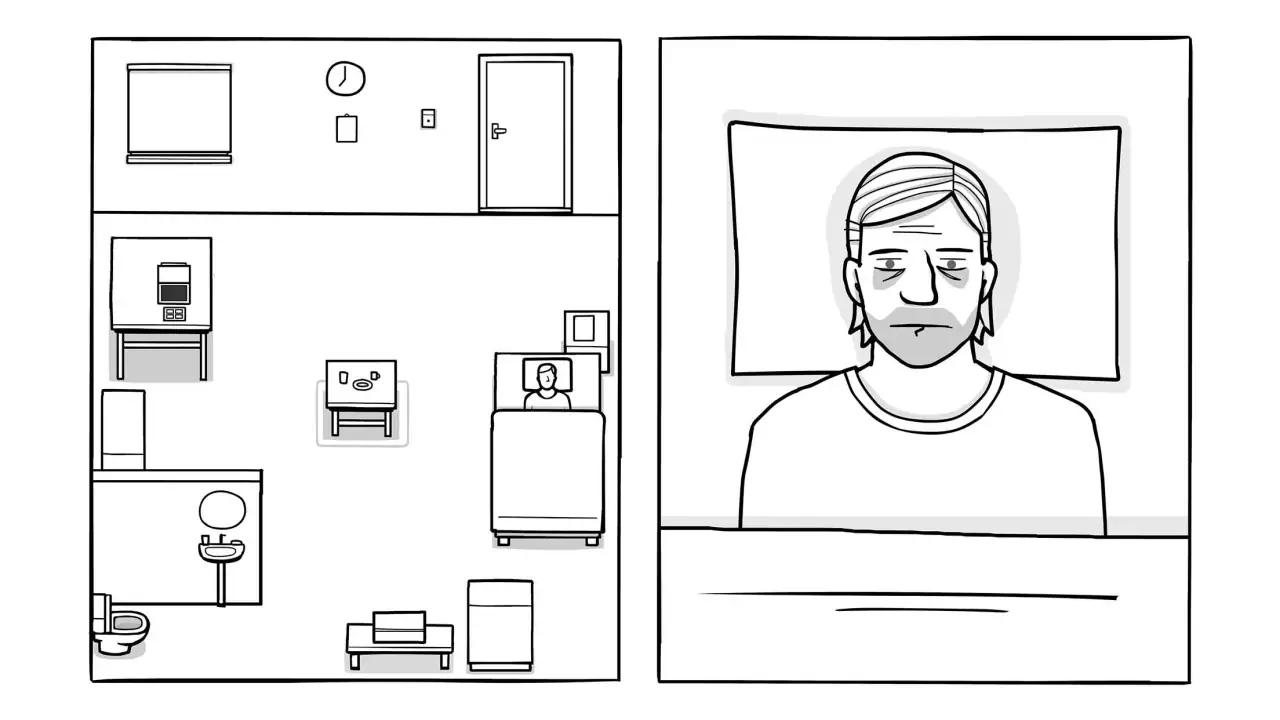
The visual presentation does a lot of the emotional work. The limited setting could have felt repetitive, but the controlled composition gives small changes more importance. A room, object, or routine can begin to feel suspicious simply because the game has trained me to pay attention. The result is a type of tension that comes from uncertainty rather than danger on screen.
The sound design also supports that feeling. I would not play this while a television is competing for my attention, because quiet audio cues and pauses contribute to the experience. Headphones are useful when I want to notice the full mood, but the game remains understandable when played without them. The important point is that this is a game of concentration, not background entertainment.
Its Teen content rating fits the unsettling tone. The discomfort comes from the story and presentation rather than from a cheerful, family-oriented style. If you prefer mysteries that stay light and playful, the mood may be too strange. If you enjoy psychological unease and surreal situations, the restraint works in its favor.
Gallery
A puzzle design that rewards careful observation
What I appreciate most is that the puzzles are tied to the environment instead of feeling like unrelated mini-games. When I get stuck, the answer is usually not to tap everything randomly. It is better to review the sequence of events, inspect the objects that have received unusual attention, and ask what the game is quietly teaching me.
One useful habit is to separate observation from action. On a first pass, I look at the whole scene and note anything that seems out of place. On a second pass, I test only the interactions that connect to those observations. This avoids turning the game into a tapping exercise and makes successful solutions feel earned.
Another practical tip is to remember the order of routine actions. The game uses repetition in a meaningful way, so the sequence itself can become a clue. If I focus only on individual objects, I can miss the relationship between them. Thinking in terms of “what happened before this?” is often more productive than asking which item can be opened next.
There is also a trade-off here. Players who enjoy generous hint systems may find the experience less forgiving than a conventional casual puzzle game. I sometimes had to step away and return with a clearer head rather than forcing a solution. That is not a flaw for me, but it does mean the game is best suited to people who can tolerate temporary uncertainty.
What the developer’s style means for new players
Second Maze presents a compact, authored adventure rather than an endlessly expanding service. The game’s identity comes from its mood, odd logic, and carefully controlled progression. That is important for anyone comparing it with larger adventure games: the appeal is not scale, customization, or an open-ended map. The appeal is the feeling of entering a strange puzzle box and gradually understanding its internal rules.
Players familiar with the broader Rusty Lake and Cube Escape style will probably recognize the taste for surreal imagery and indirect storytelling. Newcomers do not need to approach it as a technical sequel or as a conventional action adventure. I found it more helpful to treat it as its own contained experience, where the atmosphere establishes expectations but the details still need to be discovered personally.
The game was released on January 8, 2020, and its current version shows that it has remained available as a maintained product rather than being abandoned immediately after launch. I would not interpret a version number as proof that every player will have the same experience on every device, but it does make the present release the sensible one to try. On Android, the listed minimum is version 6.0, which keeps the hardware and operating-system barrier relatively approachable for older compatible phones.
The game is priced at $3.49. For me, that price makes the most sense when I think of it as a focused premium adventure rather than a game I will play indefinitely. I would rather pay once for a compact mystery that respects my time than install a free alternative designed around interruptions, but players who measure value by hundreds of hours may reach a different conclusion.
Who will enjoy it, and where it may fall short
The strongest audience is someone who likes atmospheric puzzle adventures with a clear authorial voice. If you enjoy examining rooms, connecting small clues, and letting a story unfold indirectly, this is an easy game to consider. It also works well for players who prefer touch controls and short, self-contained sessions instead of a large control scheme.
A realistic everyday use case is an evening commute or a quiet break when I have enough concentration for a mystery but not enough time for a long role-playing game. I can play through a small portion, think about an unresolved clue, and continue later. It is also a good fit for a shared solving session with a friend: one person can watch the details while the other suggests connections. The unusual presentation gives both players something to discuss.
I would be more cautious about recommending it to someone who wants explicit storytelling. The game expects me to interpret what I see, and that can feel opaque when I want a direct explanation. It is also not ideal for anyone who dislikes repeating actions or revisiting familiar spaces. Those elements are part of the design, not signs that the game is trying to imitate a fast-paced adventure.
Compared with a typical hidden-object game, this feels more cohesive and less dependent on scanning a crowded picture for a fixed list of items. Compared with a traditional point-and-click adventure, it is more concentrated and less interested in broad travel between locations. Compared with a free puzzle game, it offers a stronger atmosphere without asking me to manage a stream of unrelated challenges. The trade-off is that its unusual logic can be harder to read than the rules in a standard casual puzzler.
I also would not choose it when I want a relaxing game with no emotional tension. The presentation can be calm on the surface while still feeling uncomfortable underneath. That contrast is intentional, but it means the game is not simply a soothing bedtime activity. For me, it works better when I am in the mood to be intrigued and slightly unsettled.
Practical expectations before paying
The average rating is 4.8 from around ten thousand ratings, and the game has more than one hundred thousand installs. Those figures suggest that its focused style has found a substantial audience, but they should not replace personal judgment. A highly rated atmospheric puzzle can still be a poor match for someone who wants action or transparent instructions.
It has also received 757 reviews, which gives prospective players a useful reminder that the game invites strong reactions. The people who connect with its tone may value the same ambiguity that frustrates others. I would read the rating as evidence of a well-liked identity, not as a promise that every puzzle will feel immediately intuitive.
Before buying, I would ask myself three questions. Do I enjoy solving problems without constant guidance? Am I comfortable with a story that may require interpretation? And will I have the patience to inspect a scene instead of tapping rapidly through it? If the answer to all three is yes, the purchase is easier to justify. If not, a more conventional puzzle adventure may be a better use of the money.
One small workflow makes a real difference: I keep a brief note of recurring symbols, unusual changes, and the order of important actions. I do not write down every detail, because that removes the pleasure of discovery. A few keywords are enough to prevent the most frustrating kind of progress loss, where I remember seeing a clue but cannot remember where it appeared.
I also recommend taking screenshots only when the device and personal habits make that comfortable, rather than searching immediately for a full walkthrough. A complete solution can flatten the game’s best moments. If I need help, I prefer a narrow hint about the relevant area or sequence, then return to the scene and finish the reasoning myself.
What has changed and what existing players should expect
The current version, 1.2.6, is the release I would use when returning to the game. Its presence is useful for existing players who want to revisit the adventure without relying on an older installation. Still, I would avoid assuming that a version label means the core experience has been transformed. The central appeal remains the same: close observation, unusual storytelling, and a deliberately contained setting.
For someone who played earlier, the main practical expectation should be continuity rather than a completely different game. I would return for the atmosphere and the puzzle structure, not because I expect a new genre or a radically expanded format. That distinction matters when deciding whether to reinstall: this is a good revisit if the original mood worked for you, but less compelling if you were hoping for a broad new campaign.
New players benefit from starting with the current release because it avoids unnecessary uncertainty about whether they are experiencing the intended present version. I would also give the opening time to establish its pace. Judging it after only a few hurried interactions would be unfair, because much of its effect comes from noticing how the routine is framed.
The remaining gaps are mostly about accessibility of thought rather than missing spectacle. The game could be frustrating for players who need clearer signposting, and its quiet presentation may not hold attention when played amid distractions. Those are meaningful limitations even though they are closely connected to the qualities that make it distinctive.
Another limitation is replay motivation. Once I understand the major logic of a sequence, the surprise naturally becomes weaker on a second pass. I can still appreciate the art direction and construction, but this is not the kind of game I return to for endless procedural variety. Its value is concentrated in the first careful discovery and in the atmosphere surrounding it.
What I would watch before recommending it widely
If I were advising a friend who is undecided, I would watch for how well the game fits their preferred pace rather than focusing only on its rating or price. The important question is whether they want a mystery that trusts them to observe. If they do, the compact format becomes a strength. If they want constant novelty, the same format may feel restrictive.
I would also pay attention to device comfort. Since this is a touch-focused experience, screen size, brightness, and the ability to play without interruptions can affect enjoyment even when the game itself is unchanged. A quiet room and a little patience are more valuable here than high-end hardware.
My final recommendation is positive, with a clear condition: choose it for its strange atmosphere and deliberate puzzles, not as a substitute for an action adventure. Second Maze has made a game that feels personal and carefully shaped. The White Door is at its best when I slow down, treat ordinary details as possible clues, and allow the unsettling story to unfold without demanding immediate explanations.
At $3.49, I consider it a sensible purchase for the right player: someone who wants a premium mobile adventure with a distinctive mood and enough mystery to encourage careful thinking. I would skip it if I needed fast rewards, extensive replay systems, or a straightforward narrative. For everyone else, the current release is a strong way to experience this particular corner of the developer’s adventure style, provided you are willing to meet it on its own quiet, peculiar terms.
FAQs for The White Door
What is The White Door about?
The White Door is a psychological point-and-click adventure from Rusty Lake, the creators of the Cube Escape series. You follow Robert Hill, a man who wakes up in a mysterious mental health facility with no memory of how he arrived there. The story unfolds through daily routines, strange observations, puzzles, and unsettling details that gradually reveal what is really happening.
How does the gameplay work in The White Door?
The game focuses on exploration, observation, and interactive storytelling rather than fast action. Each day is divided into a strict routine, and you must guide Robert through activities such as eating, sleeping, exercising, and answering questions. Paying attention to visual clues, repeating patterns, and small changes in the environment is essential for solving puzzles and progressing through the narrative.
Is The White Door suitable for children?
Although The White Door does not rely on graphic violence, it contains disturbing psychological themes, unsettling imagery, references to mental illness, confinement, memory loss, and emotionally uncomfortable situations. Its atmosphere can be intense, especially for younger players or anyone sensitive to horror and suspense. Parents should review the game’s content before allowing children to play it.
Does The White Door require an internet connection?
The White Door is primarily a single-player experience, and the main story can generally be enjoyed without an active internet connection after installation. You do not need online multiplayer, an account, or constant interaction with other players. However, internet access may still be required for downloading the game, receiving updates, restoring purchases, or accessing platform-specific services.
How long does it take to complete The White Door?
The White Door is a relatively short adventure designed to be completed over several focused play sessions. The exact duration depends on how quickly you recognize clues and whether you explore optional interactions or replay scenes to understand the story better. Players who enjoy carefully examining every detail may spend longer, while experienced puzzle fans can finish it more quickly.
Pros
- Distinctive hand-drawn art style creates a memorable atmosphere.
- Short chapters make it easy to play in brief sessions.
- Simple controls keep the experience accessible to most players.
- Dream sequences add variety to the otherwise routine-based gameplay.
- The story rewards careful attention to small visual details.
Cons
- Its slow pace may feel uneventful for players seeking constant action.
- Some puzzles rely on subtle clues that can be easy to overlook.
- The bleak tone and themes may not appeal to every player.
- Replay value is limited once the story and puzzles are completed.
- Certain scenes can feel repetitive during the daily routine sections.


